
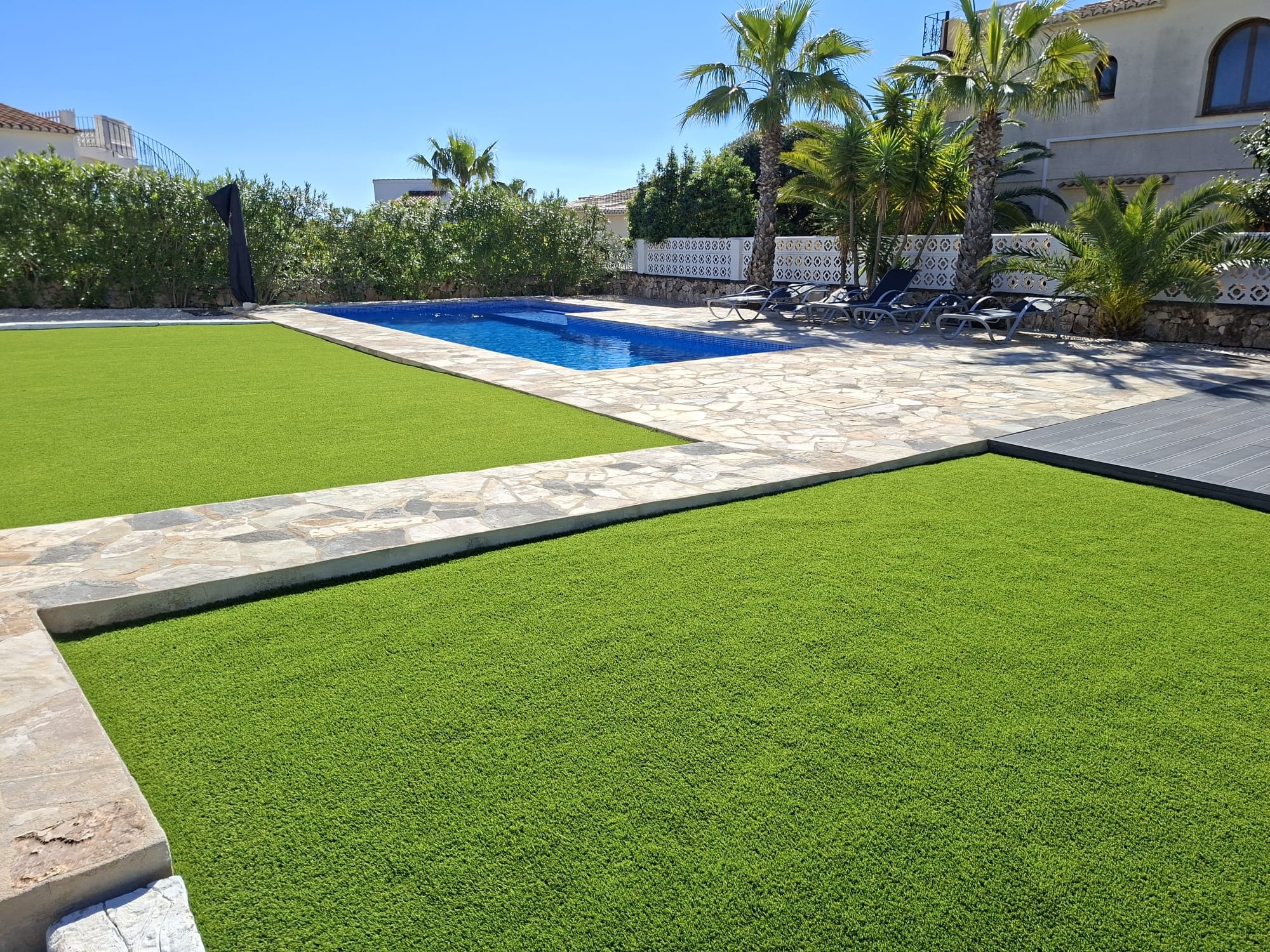
Artificial Grass Replacement
When Repair Is No Longer the Right Solution
Not every artificial grass installation can be repaired. Sometimes the grass is too worn or damaged, the original installation has failed, or the underlying preparation needs to be addressed.
We assess the existing installation first and explain what we believe is the most sensible option. If repair is practical, we'll tell you. If replacement is the better solution, we'll explain why.
Request an AssessmentOur Artificial Grass Replacement Process
Replacing artificial grass isn't simply a matter of taking up the old lawn and laying new grass. We first establish why the existing installation needs replacing and whether anything beneath it needs to be corrected.
Assess the Existing Installation
We inspect the grass, joins, edges and overall condition, looking for damage, wear or problems with the existing installation.
Recommend the Right Solution
If repair is still practical, we'll tell you. If replacement is the better option, we'll explain why and recommend the most suitable approach.
Remove & Prepare
Where replacement is required, we remove the existing grass and assess the base beneath it. Any necessary preparation is completed before the new grass is installed.
Install the New Grass
We accurately cut, position, join, edge and secure the new artificial grass, then check the finished installation to make sure everything is properly completed.
When Replacement May Be the Right Answer
Replacement isn't always necessary, but there are situations where repairing an existing installation is unlikely to give you the result you want. We assess the condition of the grass and the installation before recommending replacement.
Extensive Damage
When large areas of the grass are damaged, repairing multiple sections may no longer be practical. A new installation can provide a cleaner and more consistent result.
Multiple Damaged Areas
Several separate areas of damage can make individual repairs impractical, particularly when the surrounding grass is also showing signs of wear.
Widespread Wear
Grass that has become heavily worn, flattened or degraded may no longer respond well to cleaning or repair. We assess its overall condition before recommending replacement.
Older Installation
With older installations, matching the existing grass can sometimes be difficult if the original product is no longer available. In these cases, replacement may be the more practical option.
Poor Underlying Preparation
If the original base or preparation is causing ongoing problems, replacing the grass alone will not solve them. The underlying issue needs to be addressed before a new installation is laid.
Failed Installation
Poor workmanship can lead to recurring problems such as uneven areas, lifting edges, visible joins or movement. Where these cannot be effectively repaired, removal and proper re-installation may be the better solution.
Building or Renovation Damage
Extensions, pool work, landscaping and other building projects can significantly damage an existing installation. Depending on the extent of the damage, partial or complete replacement may be appropriate.
Changing the Grass or Garden Layout
Replacement can also be an opportunity to change the specification, improve the layout or redesign how the artificial grass is used within the garden.
Why Ground Preparation Matters When Replacing Artificial Grass
Replacing the grass without addressing the problem underneath can simply lead to the same issues happening again. Problems such as poor drainage, subsidence, uneven areas and lifting edges can sometimes be linked to the original preparation rather than the grass itself.
When we replace an installation, we remove the existing grass and assess the condition of the base underneath. Where necessary, we correct the preparation before installing the new grass.
The aim isn't simply to replace what you can see. It's to understand why the installation has failed and make sure the new installation starts on the right foundation.
Request an Artificial Grass Replacement Assessment
Thinking about replacing an existing artificial grass installation? Contact us and we'll assess the condition of the grass and the preparation underneath, then explain the options available.